Whether you're building a paver patio, preparing a concrete slab, installing a retaining wall, or backfilling a utility trench, proper compaction is one of the most important steps in the project. Without a stable, well-compacted base, even the best materials can fail over time.
Yet many contractors don't realize that not all compaction equipment is designed for the same type of work. A machine that performs exceptionally well on a crushed stone driveway may be the wrong choice for a trench filled with clay, while a roller that's perfect for asphalt can be overkill for a residential hardscape project.
Understanding the strengths of each type of compaction equipment can help you work more efficiently, achieve better results, and avoid costly callbacks.
Why Proper Compaction Matters
Compaction removes air pockets from soil and aggregate, creating a denser, more stable foundation. Properly compacted material is less likely to settle over time, helping protect everything that's built above it.
Poor compaction can lead to problems such as uneven pavers, cracked concrete, shifting retaining walls, rutting asphalt, and settlement around utility trenches. These issues often don't appear immediately, but once they do, repairs can be expensive and time-consuming.
Choosing the right machine is only part of the equation, but it's an important place to start.
Start with the Material You're Compacting
Before selecting a machine, consider what you're actually trying to compact. Different materials respond differently to vibration and impact.
Granular Materials
Gravel, crushed stone, sand, and most paver base materials compact well using vibration. These materials lock together as the air between the particles is removed, making them ideal for plate compactors.
Typical applications include:
- Paver patios
- Walkways
- Driveways
- Sidewalks
- Concrete slab preparation
Cohesive Soils
Clay and soils with a high moisture content behave differently. Rather than settling through vibration alone, they require repeated high-impact force to remove trapped air and increase density.
These materials are typically compacted using rammers, sometimes called jumping jack compactors.
Asphalt
Fresh asphalt requires vibration while minimizing sticking to the machine's base plate. That's why many contractors choose plate compactors equipped with integrated water tanks when performing asphalt patch work or repairs.
Understanding the Different Types of Compaction Equipment
Every compaction machine serves a purpose, but each is designed for different conditions and project sizes.
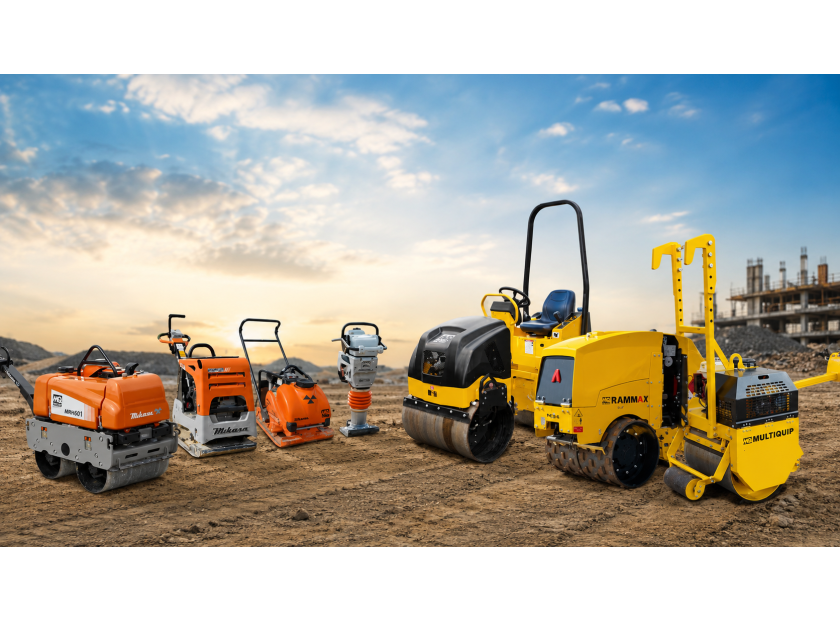
Reversible Plate Compactors
When projects become larger or require greater compaction force, reversible plate compactors become a better choice.
Unlike forward plates that only travel in one direction, reversible compactors move both forward and backward without requiring the operator to turn the machine around. They also generate significantly greater centrifugal force, making them well suited for thicker lifts and larger commercial applications.
Common uses include:
- Commercial site preparation
- Road construction
- Parking lots
- Large retaining wall bases
- Heavy aggregate compaction
Although they require a larger investment, the increased production and deeper compaction can save considerable time on larger projects.
Jumping Jack Rammers
While plate compactors rely primarily on vibration, rammers combine vibration with repeated high-impact blows that are especially effective in cohesive soils.
Their narrow footprint also allows them to work inside trenches and other confined areas where larger plate compactors simply won't fit.
Rammers are commonly used for:
- Utility trenches
- Pipe installation
- Clay soils
- Foundation backfill
- Tight spaces around structures
Whenever the job involves cohesive soils or narrow excavation work, a rammer is often the preferred tool.
Walk-Behind and Ride-On Rollers
For large-scale asphalt work or expansive soil compaction, rollers provide greater productivity than plate compactors.
Walk-behind rollers are commonly used on smaller paving projects, while ride-on rollers are designed for roads, parking lots, commercial developments, and other large jobs requiring continuous compaction across wide areas.
Although rollers aren't necessary for every contractor, they're invaluable on projects where production speed and consistent coverage become priorities.
Which Compactor Is Right for Your Project?
The easiest way to choose the right machine is to start with the type of work you're doing.
| Project | Recommended Equipment | Why It Works |
|---|---|---|
| Paver Patio | Forward Plate Compactor | Provides efficient, even compaction of the granular base material used beneath pavers. |
| Walkways and Sidewalks | Forward Plate Compactor | Easy to maneuver in narrower work areas while providing consistent base compaction. |
| Driveway Base | Forward Plate Compactor | Well suited for compacting gravel, crushed stone, and other granular driveway materials. |
| Asphalt Patch Repair | Forward Plate Compactor with Water Tank | The water system helps prevent hot asphalt from sticking to the base plate during compaction. |
| Utility Trench | Jumping Jack Rammer | Its narrow footprint fits confined spaces, while concentrated impact force works well on cohesive soil. |
| Clay Backfill | Jumping Jack Rammer | High-impact force generally compacts cohesive clay more effectively than vibration alone. |
| Commercial Site Preparation | Reversible Plate Compactor | Greater compaction force and forward-reverse operation improve productivity across larger areas. |
| Parking Lots and Roads | Walk-Behind or Ride-On Roller | Wider drums and continuous operation provide efficient, consistent coverage across large surfaces. |
Choosing the Right Size Compactor
Bigger isn't always better.
A lightweight forward plate may be ideal for residential hardscaping because it's easier to transport and maneuver around tight spaces. On the other hand, contractors working on commercial developments often benefit from heavier machines that provide greater centrifugal force and higher production rates.
When comparing compactors, it's worth considering factors such as machine weight, plate size, centrifugal force, engine type, and whether features like a water tank are necessary for your application.
Selecting a machine that's appropriately sized for the work often results in better efficiency than simply choosing the largest available model.
Common Compaction Mistakes
Even with the right equipment, poor technique can lead to disappointing results.
One of the most common mistakes is attempting to compact lifts that are too thick. Material should generally be compacted in multiple thinner layers rather than one deep lift to achieve consistent density throughout the base.
Another common issue is using the wrong machine for the material. Plate compactors perform exceptionally well on granular materials, but cohesive soils typically require the concentrated impact force of a rammer.
Moisture also plays an important role. Material that's excessively dry or overly saturated may not compact properly, regardless of the equipment being used.
Finally, rushing the process can reduce the effectiveness of compaction. Making enough overlapping passes helps produce a more uniform and stable surface.
Why Forward Plate Compactors Are So Popular
Forward plate compactors have earned their reputation because they're capable of handling an impressive variety of projects, and they remain a cost-effective solution for many job sites.
For contractors installing pavers, preparing slab bases, compacting gravel, or performing asphalt repairs, one quality forward plate compactor can accomplish the majority of everyday work. They're relatively easy to transport, simple to operate, and require less maintenance than larger compaction equipment, making them a cost-effective option for most routine applications.
It's no surprise that forward plate compactors continue to be among the most popular and cost-effective choices for landscapers, concrete contractors, masonry professionals, and general contractors alike.
Find the Right Compaction Equipment for Your Next Project
Whether you're installing a residential patio or preparing a commercial jobsite, choosing the right compaction equipment helps ensure a stable foundation and professional results.
At CMU Supply, we carry a wide selection of forward plate compactors, reversible plate compactors, jumping jack rammers, and rollers from trusted manufacturers including Multiquip Mikasa and Husqvarna. If you're unsure which machine best fits your application, our team can help you compare your options and find equipment that matches the type of work you do most often.
Browse our selection of compaction equipment and build every project on a solid foundation.