
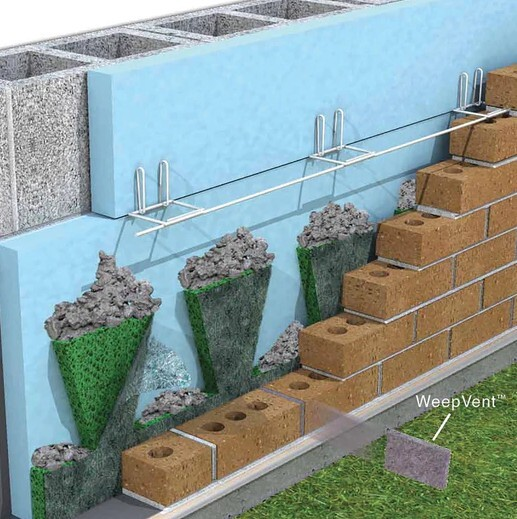
When it comes to masonry wall construction, structural performance isn’t achieved with a single product. Strength, stability, and long-term durability come from reinforcement components working together as a system. Understanding how these components interact helps contractors build walls that meet code requirements and perform over time.
The Goal of Structural Reinforcement in Masonry
Structural reinforcement in masonry serves three primary purposes:
- Transfer loads safely between masonry and backup structures
- Control movement caused by wind, seismic forces, shrinkage, and temperature changes
- Improve crack control and overall wall performance over the life of the structure
Rather than relying on one product, these goals are achieved through layered reinforcement systems installed at different points throughout the wall.
1. Anchors & Ties: Connecting the Wall to the Structure
Anchors and ties are responsible for connecting masonry veneer to the backup structure, whether that backup is concrete, CMU, or steel framing.
Their role is to:
- Transfer lateral loads (wind, seismic)
- Maintain structural connection while allowing differential movement
- Support code-compliant veneer installation
Different wall assemblies require different anchor types, spacing, and attachment methods, but anchors and ties are always a foundational part of the system.
Without proper anchoring, even a well-built masonry wall can fail under load.
2. Masonry Joint Reinforcement: Strengthening the Wall Itself
Joint reinforcement is installed within mortar joints to increase tensile strength and improve crack control across the wall.
It helps:
- Distribute stresses more evenly
- Reduce cracking caused by shrinkage and movement
- Improve overall wall performance
Joint reinforcement works in conjunction with anchors and ties, reinforcing the masonry assembly internally while anchors connect it externally to the structure.
This internal reinforcement is especially important in long wall runs, openings, and areas subject to increased loads.
3. Rebar Support: Ensuring Reinforcement Performs as Designed
Reinforcing steel only performs as intended when it is properly positioned within the wall or concrete placement.
Rebar support products are used to:
- Maintain correct steel placement during construction
- Ensure proper concrete cover
- Prevent steel from shifting during pours
Incorrectly supported rebar can compromise structural performance, even if the correct amount of steel is specified.
Rebar support is often overlooked, but it plays a critical role in making sure the rest of the reinforcement system functions correctly.
How These Components Work Together as a System
In a properly constructed masonry wall:
- Anchors & ties connect the wall to the structure
- Joint reinforcement strengthens the masonry itself
- Rebar support ensures steel reinforcement is positioned correctly
Each component addresses a different aspect of structural performance, and removing one weakens the system as a whole.
This is why experienced contractors often think in terms of complete wall assemblies, not individual products.
What Is Considered a Complete Masonry Wall Reinforcement System?
While masonry wall assemblies vary by application and design requirements, a typical reinforced masonry wall system includes the following core components:
- Anchors & Ties
To connect the masonry to the backup structure and transfer lateral loads while allowing for movement. - Masonry Joint Reinforcement
To strengthen the wall, control cracking, and distribute stresses within the masonry assembly. - Reinforcing Steel (Rebar)
To provide vertical and horizontal structural reinforcement as required by design. - Rebar Support & Positioning Accessories
To maintain proper placement and concrete cover during construction so reinforcement performs as intended.
Together, these components work as a system to support structural performance, durability, and code compliance.
Actual wall assemblies may require additional components or different configurations depending on design, loading, and local code requirements.
Planning a Complete Wall Assembly
When planning materials for a masonry wall, it’s helpful to think through the system from the start:
- What is the backup structure?
- What loads will the wall experience?
- Where is movement expected?
- How will reinforcement be installed and supported?
Answering these questions early makes it easier to select compatible reinforcement components and avoid missing critical materials during ordering.
Why Structural Reinforcement Is Best Sourced as a System
Sourcing structural reinforcement components together helps ensure that each part of the wall assembly works as intended during installation and over the life of the structure.
When anchors, joint reinforcement, reinforcing steel, and rebar support are selected as a system, contractors can:
- Ensure compatibility between components
Reinforcement products are designed to work within specific wall configurations and tolerances. Selecting compatible components helps avoid fitment issues, spacing conflicts, or installation adjustments in the field. - Reduce delays caused by missing or mismatched materials
Structural reinforcement is installed in stages. Missing a single component—such as joint reinforcement or rebar support—can delay installation and disrupt sequencing on the jobsite. - Simplify job planning and material takeoffs
Thinking in terms of a complete wall system makes it easier to plan quantities, coordinate deliveries, and align materials with project drawings and specifications. - Improve installation efficiency and consistency
When reinforcement components are designed to work together, installation is faster and more consistent, reducing rework and helping crews maintain proper placement and spacing.
While each reinforcement product serves a specific function, their real performance is achieved when they are used together as part of a complete wall system. Treating reinforcement as a system—rather than a collection of individual items—helps support structural performance, code compliance, and long-term durability.
Final Thoughts
Strong masonry walls aren’t built with shortcuts. They’re built with properly designed reinforcement systems that account for movement, load transfer, and long-term performance.
Understanding how anchors, joint reinforcement, and rebar support work together allows contractors to build walls that meet code requirements, perform reliably, and stand the test of time.