How to Choose the Right Under-Slab Vapor Barrier for Your Project
Moisture beneath a concrete slab is one of the most overlooked causes of flooring failures, adhesive breakdown, coating damage, and indoor air quality concerns. While all vapor barriers are designed to limit moisture migration, not all products provide the same level of protection.
Understanding the differences between vapor barriers, waterproofing membranes, and specialized contaminant-resistant systems can help contractors, architects, and owners select the right solution for their project.
What Is a Concrete Vapor Barrier?
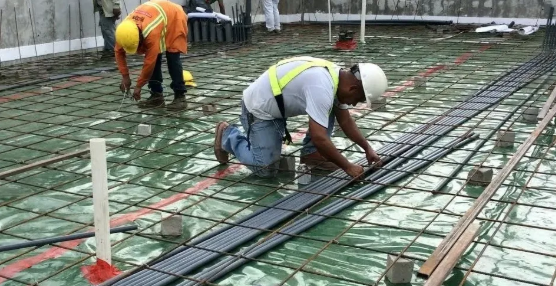
A concrete vapor barrier is a membrane installed beneath a concrete slab to prevent moisture vapor from migrating upward through the concrete and into the building.
Even when soil appears dry, water vapor is constantly present below grade. Without a properly installed vapor barrier, moisture can travel through the slab and damage flooring systems, coatings, adhesives, and other moisture-sensitive finishes.

Vapor Barrier vs. Waterproofing
A common misconception is that vapor barriers and waterproofing membranes serve the same purpose.
Vapor barriers are designed to control moisture vapor transmission.
Waterproofing systems are designed to stop bulk water intrusion.
Some projects require only vapor protection, while others require both waterproofing and vapor control.

Choosing the Right W. R. Meadows Vapor Barrier
PERMINATOR 10 MIL
A cost-effective solution for standard slab-on-grade construction where moderate jobsite activity and traditional flooring systems are expected.
PERMINATOR 15 MIL
Provides additional puncture and tear resistance for projects with heavier construction traffic and reinforcement activity.
PERMINATOR 20 MIL
Recommended when maximum durability and enhanced moisture protection are priorities, including hospitals, schools, retail facilities, and multifamily construction.
PERMINATOR EVOH
Designed for projects where protection against moisture vapor and soil contaminants is critical. Ideal for sites with methane, VOCs, hydrocarbons, radon concerns, or brownfield redevelopment.
PMPC
A true vapor seal and waterproofing membrane with extremely low permeance. Recommended for projects with moisture-sensitive flooring systems where maximum protection is required.
PRECON
A blindside and pre-applied waterproofing membrane that bonds directly to concrete while also providing vapor protection beneath slabs.
W. R. Meadows Vapor Barrier Comparison Guide
| Product | Recommended Applications | Vapor Protection | Soil Gas Protection | Waterproofing | Durability |
|---|---|---|---|---|---|
| PERMINATOR 10 MIL | Standard residential and commercial slabs | ✓ Good | ✗ | ✗ | Standard |
| PERMINATOR 15 MIL | Higher traffic jobsites requiring added puncture resistance | ✓ Better | ✗ | ✗ | Enhanced |
| PERMINATOR 20 MIL | Hospitals, schools, retail, multifamily, sensitive flooring | ✓ Excellent | ✗ | ✗ | Maximum |
| PERMINATOR EVOH | Brownfield sites, methane, radon, VOCs, hydrocarbons | ✓ Highest | ✓ Yes | ✗ | Maximum |
| PMPC | True vapor seal and waterproofing under slabs | ✓ Industry-Leading | ✓ Radon Reduction | ✓ Yes | Very High |
| PRECON | Blindside and pre-applied waterproofing applications | ✓ High | Limited | ✓ Yes | High |
Not sure which vapor barrier is right for your project? Contact CMU Supply for product recommendations, specifications, and pricing assistance.
Questions to Ask Before Selecting a Vapor Barrier
- What flooring system will be installed?
- Are soil gases or contaminants present?
- How much construction traffic will occur over the membrane?
- Is waterproofing required in addition to vapor protection?
The answers to these questions often determine which system is the best fit.

Need Help Choosing the Right Vapor Barrier?
CMU Supply can help evaluate project requirements, review plans, and source the appropriate W. R. Meadows vapor barrier or waterproofing solution for your application. Contact our team for product recommendations and pricing.


