
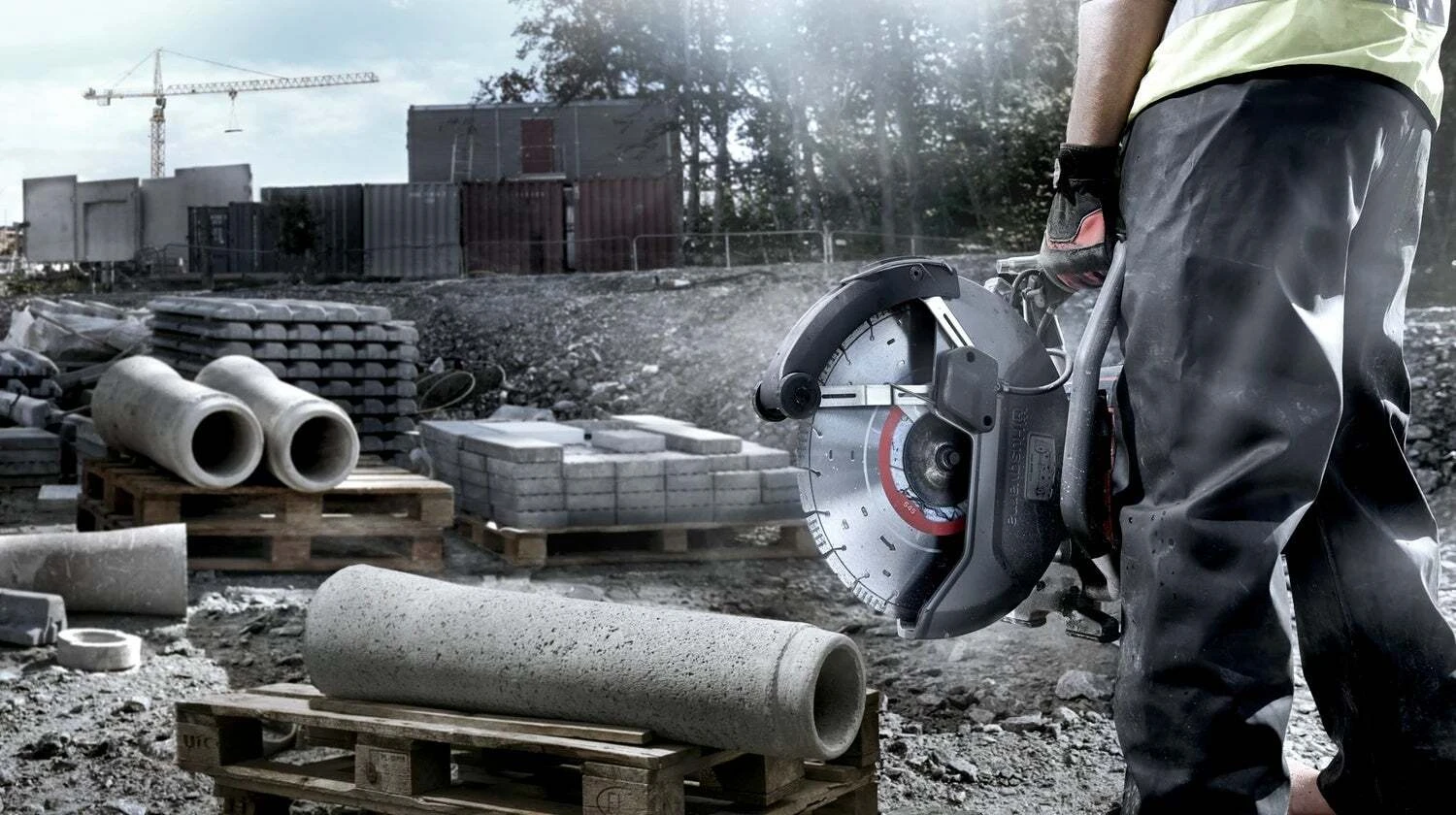
Concrete cutting blades may look similar at first glance, but choosing the right blade for the job can make a major difference in cutting speed, blade life, and overall jobsite efficiency. Contractors working with concrete, asphalt, masonry, and brick rely on diamond blades every day, and selecting the correct blade helps ensure cleaner cuts and lower operating costs.
Whether you're using a handheld cutoff saw, a walk-behind flat saw, or an early entry system, understanding how diamond blades work and how they differ will help you get the best performance from your equipment.
How Diamond Blades Cut Concrete
Diamond blades do not cut like traditional abrasive blades. Instead of grinding material away, they use industrial diamonds embedded in metal segments along the edge of the blade.
As the blade rotates, these diamonds grind through the concrete while the metal bond wears down just enough to expose new diamonds underneath. This process allows the blade to maintain consistent cutting performance over time.
The key factor that affects performance is the relationship between the blade bond and the material being cut. Hard concrete typically requires a softer bond so diamonds are exposed quickly, while softer materials require a harder bond to prevent excessive wear.
Common Types of Concrete Cutting Blades
Concrete cutting blades are designed for different stages of the job and different types of equipment. Understanding these categories makes it easier to choose the right blade.
Early Entry Blades

Early entry blades are used to cut control joints in green concrete shortly after finishing. These blades are designed to work with early entry saw systems such as Husqvarna Soff-Cut saws, which use a skid plate to stabilize the surface during cutting.
They are commonly used on slab-on-grade construction, warehouse floors, sidewalks, and driveways where crack control is critical.
Walk-Behind Saw Blades

Walk-behind saw blades are used for cutting fully cured concrete and asphalt. These blades are designed for deeper cuts and are commonly used in roadwork, repair projects, and structural slab cutting.
They are typically larger in diameter and built for durability and consistent performance in tougher materials.
Handheld Cutoff Saw Blades

Cutoff saw blades are used with portable power cutters for smaller or more precise cutting applications. These are commonly used for masonry work, block cutting, curb cuts, and utility installations.
They provide flexibility on the jobsite and allow contractors to work in tighter areas where larger saws cannot be used.
Choosing the Right Husqvarna Diamond Blade for the Job
Selecting the right blade starts with understanding the application, the material, and the type of saw being used. Husqvarna offers a wide range of blades designed for specific use cases, from early entry cutting to high-production flat sawing. This chart allows contractors to quickly match the blade to the job, whether they are cutting green concrete, cured slabs, or masonry materials.
| Application | Recommended Blade | Best For | Typical Saw Type |
|---|---|---|---|
| Early Entry Cutting | XL & FLX Series Blades | Cutting control joints in green concrete | Early entry (Soff-Cut) saws |
| General Concrete Cutting | Vari-Cut S45 | Standard concrete, sidewalks, slabs | Handheld cutoff saws |
| Hard / Reinforced Concrete | Vari-Cut S65 / Elite-Cut Turbo | Hard aggregates, reinforced slabs | Cutoff saws / walk-behind saws |
| High Production Cutting | Elite-Cut Turbo / BHT3 | Roadwork, large slab cutting | Walk-behind flat saws |
| Masonry / Brick / Block | Vari-Cut S35 / S45 | Brick, block, and pavers | Masonry saws / cutoff saws |
Understanding Blade Series Differences
Different blade series are designed for different levels of performance, durability, and cutting conditions. Some are built for everyday use, while others are designed for high-production cutting or harder materials.
| Blade Series | Typical Use | Key Advantage |
|---|---|---|
| XL & FLX Series | Early entry cutting (green concrete) | Clean joints and reduced raveling |
| Vari-Cut S45 | General purpose concrete cutting | Versatile and cost-effective |
| Vari-Cut S65 | Hard concrete and reinforced materials | Designed for tougher applications |
| Elite-Cut Turbo | High-performance concrete cutting | Faster cutting and longer life |
| BHT3 | High production flat sawing | Built for durability on large jobs |
What Affects Blade Performance
Blade performance is influenced by several jobsite factors. Aggregate hardness plays a major role, as harder aggregates wear blades differently than softer materials. Mix design also matters, especially with modern concrete mixes that include additives or fly ash.
Environmental conditions can also impact performance. Temperature, wind, and humidity affect how concrete cures, which can influence how easily it can be cut and how the blade performs.
Matching the blade to these conditions helps improve cutting speed and extend blade life.
Signs You May Be Using the Wrong Blade
Blade issues usually show up quickly when the wrong blade is being used. Common signs include:
- Slow cutting speed
- Excessive blade wear
- Blade glazing or reduced cutting ability
- Rough or uneven cuts
- Overheating during cutting
If any of these issues occur, switching to a blade designed for the material and application can significantly improve performance.
Find the Right Concrete Cutting Blade
Diamond blades are one of the most important tools on any concrete jobsite. Choosing the right blade helps contractors cut faster, extend blade life, and reduce downtime.
At CMU Supply, we carry a full range of Husqvarna diamond blades designed for early entry cutting, general concrete cutting, and high-production applications. Whether you're cutting green concrete, cured slabs, or masonry materials, selecting the right blade ensures better results on every job.
Browse our selection of concrete cutting blades to find the right option for your equipment and application.