
If you’re pouring concrete in cold weather, you’ve probably heard that you “need the right R-value” in your curing blankets. But what does that actually mean — and how much insulation is enough for your job?
This guide is written for contractors, project managers, and buyers who need to choose concrete curing blankets that actually work in real conditions. We’ll break down what R-value means, how it’s measured, and how to select the right level of insulation for your project without over- or under-buying.
Why Concrete Needs Protection During Curing
Concrete doesn’t gain strength by drying — it gains strength through hydration, a chemical reaction between cement and water. That reaction generates heat and must stay within a safe temperature range to develop proper strength.
When temperatures drop too low:
- Hydration slows or stops
- Surface cracking can occur
- Long-term strength is reduced
- Finished concrete may fail inspection or performance requirements
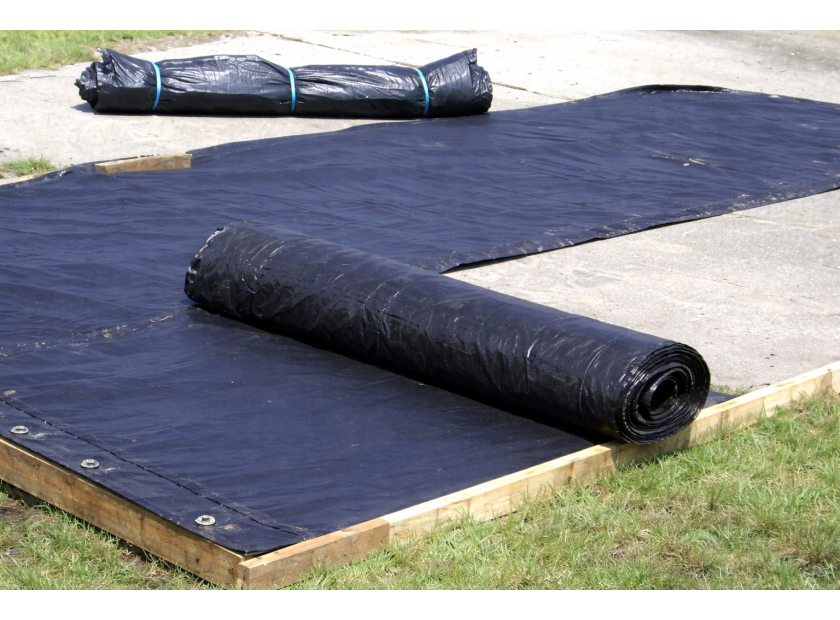
Concrete curing blankets help by trapping the heat generated during hydration and shielding the surface from cold air, wind, and moisture loss.
What R-Value Actually Means for Concrete Curing Blankets
R-value is a measurement of thermal resistance — in simple terms, how well a material slows heat loss.
For concrete curing blankets:
- Higher R-value = better insulation
- Lower R-value = less protection in cold conditions
What R-value does not mean:
- It does not generate heat
- It does not replace proper curing practices
- It does not guarantee protection in all temperatures
R-value tells you how well the blanket can retain the heat already present in the concrete during curing.
How R-Value Is Measured on Curing Blankets
Concrete curing blankets are typically tested by independent laboratories using recognized standards such as ASTM C-518 or ASTM C-236.
In these tests:
- The blanket is evaluated for its ability to resist conductive, convective, and radiant heat loss
- Testing is often performed with a nominal air space to simulate real-world conditions
- Results provide an effective R-value rather than a theoretical number
This matters because curing blankets work in the field — not in a lab — and effective R-values better reflect job site performance.
Insulated vs. Non-Insulated Curing Blankets
Not all concrete curing blankets are insulated.
Non-Insulated Blankets
- Often used for moisture retention only
- Provide minimal thermal protection
- Best for mild conditions above freezing
Insulated (Foam) Curing Blankets
- Contain foam or multi-layer insulation
- Designed to retain hydration heat
- Necessary for cold weather, winter pours, and ground thawing
If overnight temperatures are approaching or below freezing, insulated curing blankets are the safer choice.
Choosing the Right R-Value for Your Project
The correct R-value depends on temperature, duration of curing, and site conditions.
General R-Value Guidelines
Job Conditions
Above freezing overnight
Near freezing (32°F)
Sub-zero temperatures
Ground thawing before pour
Recommended R-Value
R-1.5 to R-2
R-2.5
R-2.8 or higher
R-2.8 or higher
Higher R-values provide greater protection, but they also add weight and cost. The goal is enough insulation to protect hydration heat, not excessive insulation that adds unnecessary expense.
Do Concrete Curing Blankets Replace External Heat?
In many cases, yes — but not always.
Curing blankets are effective when:
- Concrete generates enough hydration heat
- Temperatures are moderately cold
- Blankets are properly installed and secured
You may still need supplemental heat when:
- Temperatures are extremely low for extended periods
- Large mass pours are exposed to wind
- Curing must be accelerated to meet tight schedules
Blankets are often used in combination with heaters or enclosures on critical winter projects.
Common Mistakes When Buying or Using Curing Blankets
Contractors often run into problems not because of the product, but because of how it’s selected or used.
Common issues include:
- Choosing too low an R-value for overnight temperatures
- Removing blankets too early
- Failing to overlap blankets at seams
- Not securing blankets against wind movement
Understanding R-value helps avoid these mistakes before they cost time and money.
Why R-Value Should Factor Into Your Purchase Decision
When selecting concrete curing blankets, R-value should be considered alongside:
- Blanket size and coverage
- Durability of outer skins
- Attachment points (grommets, fasteners)
- Reusability across multiple projects
A properly selected insulated curing blanket helps:
- Protect concrete strength
- Reduce rework and delays
- Keep projects on schedule during cold weather
Final Thoughts: Buy for Conditions, Not Guesswork
R-value isn’t just a number on a spec sheet — it’s a practical tool that helps you match insulation performance to real job site conditions.
If you’re planning cold-weather concrete work, choosing the right R-value curing blanket can make the difference between a successful pour and costly setbacks. Buy based on expected temperatures, curing duration, and exposure, and you’ll get consistent, reliable results throughout the season.