When temperatures drop below freezing, concrete placement becomes more complex. Cold weather slows hydration, extends set times, and increases the risk of freezing before concrete reaches sufficient strength. Without the right tools and planning, this can lead to surface defects, cracking, and long-term durability issues.
This checklist outlines the essential tools, materials, and practices contractors use to place concrete safely and effectively in cold weather. From curing blankets and heaters to sealants and additives, the right setup makes a major difference in winter conditions.
What Qualifies as Cold-Weather Concreting?
The American Concrete Institute (ACI) defines cold-weather concreting as any time the air temperature is expected to fall below 40°F (4°C) for more than three consecutive days, or when temperatures drop below 32°F (0°C) at any point within the first 24 hours after placement.
In these conditions, contractors must take steps to:
- Maintain concrete temperature during placement and curing
- Protect against early-age freezing
- Ensure subgrade and reinforcement are not frozen
- Accelerate strength gain if necessary to maintain schedule
Cold-Weather Concreting Essentials
Insulated Concrete Blankets
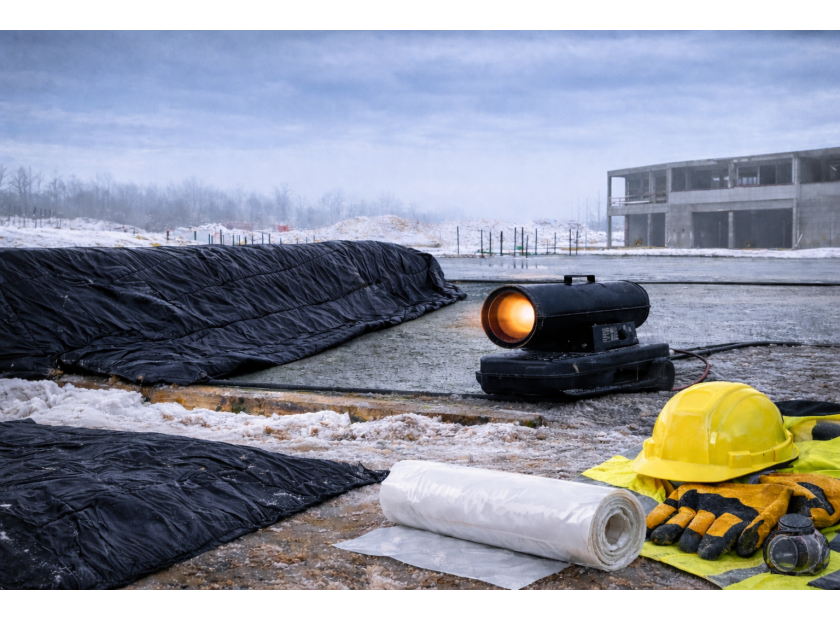
Insulated curing blankets help trap internal heat and shield concrete from exposure to freezing air, wind, and precipitation. They are commonly used on slabs, footings, and precast elements during winter work.
CMU Supply stocks insulated concrete blankets in multiple sizes suitable for slab curing, thermal protection, and ground cover. These blankets are durable, reusable, and jobsite-ready for cold-weather concrete protection.
Jobsite Heating
Heaters are frequently used to warm subgrade and maintain ambient conditions for proper curing. Ground heaters or forced-air heaters may be needed to:
- Thaw frozen soil before pouring
- Keep formwork and surfaces above 40°F
- Support continuous curing in freezing conditions
Temporary enclosures or windbreaks are often used with heaters to reduce heat loss and improve efficiency.
Cold-Weather Admixtures and Accelerators
Chemical admixtures can improve early strength gain and reduce setting time when temperatures are low. These materials are often included by the ready-mix supplier but should be coordinated in advance.
Typical options include:
- Non-chloride accelerators (safe for reinforced concrete)
- Set accelerators to speed finishing and protect against freezing
- Hot water mixing to raise batch temperature during delivery
Always confirm compatibility with the mix design and any project specifications.
Vapor Barriers and Cold-Compatible Sealants
Even in winter, below-slab moisture control and joint sealing remain essential. Vapor barriers should be installed only over properly thawed and compacted subgrade to avoid trapping frost beneath the slab. Materials like Stego Wrap remain flexible in cold temperatures and install cleanly with compatible tapes and mastic, even during winter months. For joint and penetration sealing, it’s important to use construction sealants rated for cold-temperature application. Products like butyl sealants, including Polylok’s flexible options, are commonly used in precast, underground, or below-grade cold-weather conditions. For slab-to-slab transitions or cast-in-place joints, swelling waterstops provide added protection against water intrusion during freeze-thaw cycles.
PPE and Winter Jobsite Safety
Freezing conditions increase risks for slips, exposure, and reduced visibility. Proper personal protective equipment (PPE) helps keep crews safe and productive.
CMU Supply carries cold-weather jobsite PPE suitable for concrete and masonry contractors, including:
Insulated gloves
High-visibility outerwear
Hearing protection for enclosed heated zones
Planning Considerations
Concrete placed in cold weather will take longer to set and cure. Even with blankets and accelerators, allow for:
- Extended finishing time
- Longer durations before form removal
- Minimum strength gain of 500 psi before exposure to freezing
- Temperature monitoring during curing is recommended, and contractors should follow guidance from ACI 306R on protection duration, insulation requirements, and concrete temperatures during placement.
Conclusion
Concrete work doesn't stop in winter — but it does require better planning. Using curing blankets, heaters, winter-ready sealants, vapor barriers, and proper PPE helps crews pour safely and effectively in freezing temperatures.
Explore products in the Concrete Forming, Construction Sealants, Air & Vapor Barriers, and Jobsite Safety categories at CMU Supply to support your next cold-weather pour.