Choosing the Right Dewatering Pump for Your Jobsite
Water buildup on a construction site can derail progress, damage materials, and create serious safety risks. Whether it’s accumulated rainwater, groundwater seepage, or overflow from utility work, clearing water quickly and efficiently is a critical part of keeping a job on schedule.
That’s where dewatering pumps come in. But not all pumps are created equal—and using the wrong type can lead to breakdowns, clogs, or delays. The best pump for your job depends on several key factors: the type of water, the presence of debris, how far and high it needs to be moved, and the environment you're working in.
In this guide, we’ll break down:
- The most common types of dewatering pumps
- Key specs that impact performance and reliability
- Typical jobsite scenarios and the right pump for each
- How to decide between electric and gas-powered models
- Accessories that help your system run smoother
Types of Dewatering Pumps Explained
Knowing which pump technology fits your application is the first step. Here are the most common types used on construction sites:
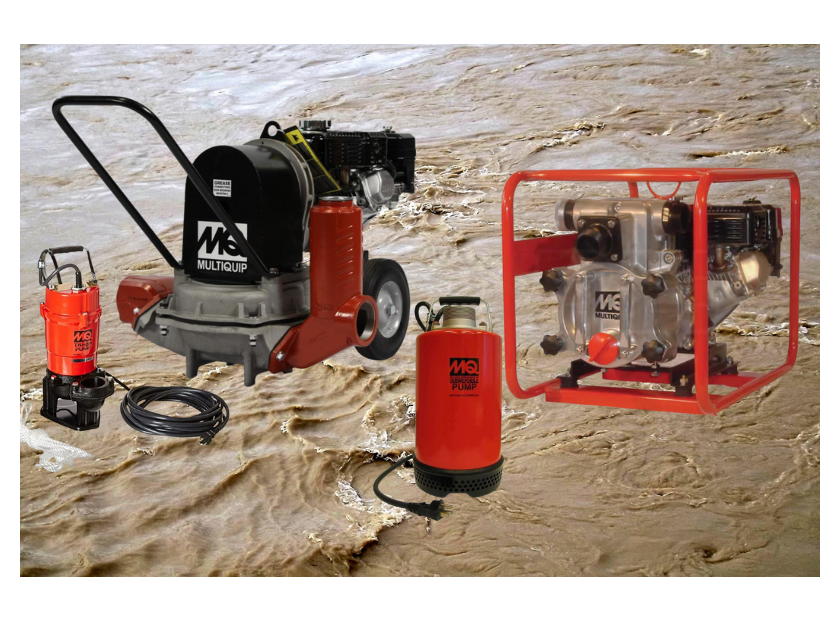
Submersible Centrifugal Pumps
These electric-powered pumps are fully submersible and operate underwater. They’re ideal for confined or below-grade areas like vaults, sumps, or footings. Submersibles work best with relatively clean or slightly muddy water and are often lightweight and portable.
Trash Pumps
Trash pumps are gas-powered and built to handle water with solids—like leaves, sand, or gravel. They’re frequently used after storms, on utility trench jobs, or in excavations where debris is common. With high flow rates and rugged construction, these are the go-to for heavy outdoor work.
Diaphragm Pumps
These positive displacement pumps are slower, but extremely durable in tough conditions. Diaphragm pumps are designed to handle thick slurries and high-solids content—such as mud, sludge, and standing water with heavy sediment. They can run dry without damage and are great for remote or unfiltered water.
High-Pressure Pumps
Need to move water over long distances or up slopes? High-pressure centrifugal pumps generate more head (lift), making them perfect for discharge lines that extend hundreds of feet or climb significant elevation.
Key Specs to Compare Before Buying
Choosing the right pump isn’t just about type—it’s about matching specs to your application:
- Discharge Size
- 2" pumps are the most common, but 3" and 4" units handle higher volumes for large sites.
- Flow Rate (GPM)
- This tells you how fast water moves. Don’t just go for the biggest number—make sure it matches the capacity you need to keep up with water intrusion.
- Solids Handling
- Not all pumps can handle debris. If there’s any chance of grit, sludge, or vegetation, choose a trash or diaphragm pump with appropriate solid-passing capability.
- Max Head / Lift
- This is the vertical distance the pump can push water. If you're discharging uphill or over long hose runs, high head capacity is a must.
- Power Source
- Electric submersibles are great in developed or enclosed areas. Gas-powered pumps offer flexibility and power in off-grid or high-volume settings.
Jobsite Scenarios & Best Pump Choices
To simplify pump selection, here are some common site conditions and the types of pumps that match them best:
| Jobsite Condition | Best Pump Type |
|---|---|
| Flooded trenches or footings | Submersible centrifugal pump |
| Heavy rain runoff with debris | Gas trash pump |
| Sludge, slurry, or sediment-rich standing water | Diaphragm pump |
| Utility vaults or basements with limited access | Lightweight submersible pump |
| Remote sites with no power | Gas-powered centrifugal or trash pump |
| Long-distance discharge to drainage ponds | High-pressure pump |
Electric vs. Gas-Powered Pumps
The power source you choose often depends on jobsite infrastructure, noise limitations, and volume requirements.
Electric Pumps
- Quieter operation
- No exhaust fumes—safe for enclosed or residential use
- Lower maintenance
- Require access to reliable power
- Can trip breakers if voltage isn’t stable
Gas-Powered Pumps
- Ideal for high GPM applications
- Portable and powerful in remote areas
- Handles tough conditions and large volumes
- Requires fuel and routine engine maintenance
- Not suitable for tight indoor spaces
Accessories That Improve Pump Performance
Having the right accessories on hand ensures your pumping setup runs smoothly from start to finish:
- Discharge Hoses – Choose heavy-duty PVC or lay-flat hoses based on terrain and distance.
- Suction Hoses – For gas-powered pumps, reinforced suction hoses are critical to maintaining flow.
- Float Switches – Automatically stop submersible pumps when water is cleared to prevent dry-running.
- Check Valves – Help maintain prime and prevent backflow in long runs.
- Control Boxes & Overload Protection – Keep electric pumps from burning out during high-duty cycles.
Final Thoughts
The right dewatering pump can save you hours—or days—on a job. But more importantly, it helps keep your team safe, your materials protected, and your schedule on track. Whether you’re dealing with a flooded foundation or trench runoff filled with debris, there’s a purpose-built pump to handle it.
Still not sure which pump fits your job? Talk to our team at CMU Supply. We can help you select the best fit based on flow rate, lift, jobsite layout, and durability needs.