We use cookies to make your experience better. To comply with the new e-Privacy directive, we need to ask for your consent to set the cookies. Learn more.




Concrete Repairs to Make Before Winter: A Fall Jobsite Checklist
September 01, 2026
Posted:
September 01, 2026
Fall is one of the best times to take care of concrete repairs before freezing temperatures make small problems worse.
Cracks, failed joints, spalled surfaces, and poor drainage may seem manageable in mild weather. But once temperatures begin cycling above and below freezing, moisture can enter those weak points, freeze, expand, and contribute to further deterioration.
That repeated freeze-thaw cycling is often more damaging than a single stretch of very cold weather. In areas where temperatures regularly move above and below freezing, concrete can experience many cycles over the course of a winter.
Deicing salts can add another layer of stress. Chlorides can penetrate porous concrete along with moisture and contribute to scaling, spalling, pitting, discoloration, and other forms of deterioration.
For contractors, property managers, municipalities, and facility crews, addressing these issues before winter can help protect existing concrete, reduce future repair costs, and avoid larger problems in the spring.
What to Check Before Winter
The most important fall concrete repairs usually fall into a few categories: cracks, joints, surface deterioration, water intrusion, drainage, and repair preparation.
A thorough inspection now can help identify which areas should be repaired or protected before colder weather limits your options.
Inspect Cracks Before Freeze-Thaw Cycles Begin
Start by walking slabs, sidewalks, curbs, loading areas, foundations, and other exposed concrete surfaces.
Not every crack requires the same repair, but cracks that allow water into the concrete deserve particular attention before winter. Once moisture gets inside, repeated freezing and thawing can place additional stress on the surrounding concrete.
Look for cracks that have widened, developed crumbling edges, collect water, or are located near joints and slab edges. Previous repairs should also be inspected. If an old crack repair has started separating or breaking down, it may need to be removed and replaced before freezing weather arrives.
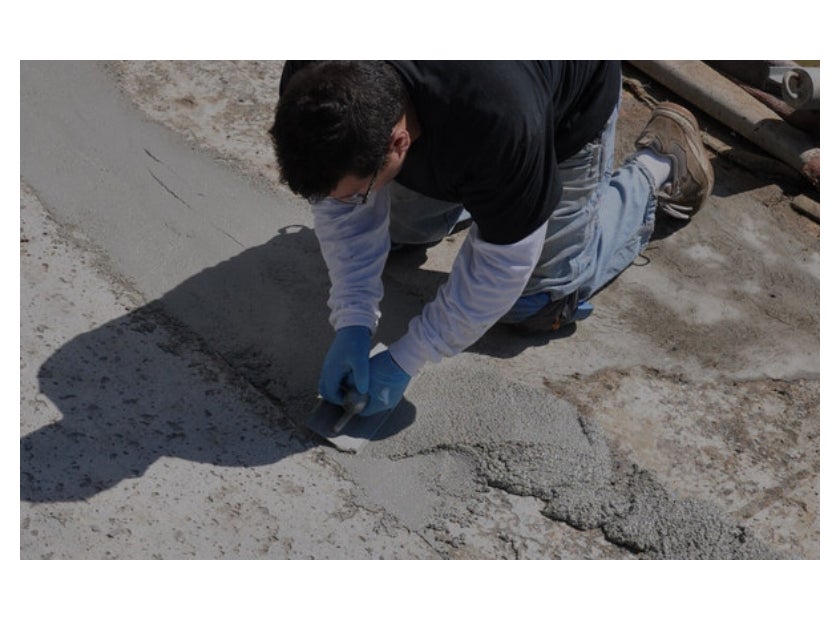
Before repairing any crack, determine whether it is active or stable and make sure the repair material matches the condition. Proper preparation is just as important as product selection. Loose concrete, dust, debris, and failed repair material should be removed so the new material can bond to a sound surface.
Check Expansion Joints, Control Joints, and Saw Cuts
Concrete joints are designed to accommodate movement, but the material inside them does not last forever.
Over time, sealants can crack, pull away from the sides of the joint, become brittle, or disappear entirely. Once that happens, water and debris have an easier path into the joint.
Fall is a good time to inspect control joints, expansion joints, saw-cut joints, isolation joints, and joints around curbs, walls, drains, and other structures.
If the existing sealant has failed, it should generally be removed before new material is installed. The joint also needs to be cleaned and prepared according to the replacement sealant manufacturer's requirements.
Keeping joints sealed before winter helps limit water intrusion and prevents debris from interfering with the movement the joint was designed to accommodate.
Repair Spalled and Deteriorated Concrete
Surface deterioration often becomes more noticeable after another freeze-thaw season.
Spalling occurs when the concrete surface begins flaking, chipping, or breaking away. It can result from moisture exposure, repeated freeze-thaw cycles, deicing chemicals, reinforcing steel corrosion, or installation issues.
Salt-related deterioration can also appear as scaling, pitting, surface erosion, cracking, or discoloration. These signs deserve attention before another winter exposes the surface to additional moisture and deicing materials.
Before making a repair, remove loose or unsound concrete until a solid substrate is reached. Depending on the condition, this may require saw cutting, grinding, chipping, or other surface preparation.
Pay particular attention to steps, stair edges, sidewalks, loading areas, curbs, slab edges, areas around drains, and exterior concrete exposed to deicing materials.
Decorative concrete deserves extra attention as well. Stamped, colored, or exposed aggregate concrete may not necessarily be more vulnerable than plain concrete, but surface damage can have a much greater visual impact.
Stop Water From Getting Into the Concrete
Water is one of the biggest concerns heading into winter.
Concrete is porous, even when fully cured. If moisture enters through the surface, cracks, joints, wall penetrations, or other openings, freezing temperatures can place additional stress on the material.
Fall is therefore a good time to look beyond visible surface damage and identify where water is getting in.
Foundation walls, construction joints, slab-to-wall transitions, below-grade concrete, penetrations, and deteriorated sealant are all worth inspecting.
Depending on the application, the solution may involve a concrete repair material, joint sealant, waterproofing system, or air and moisture barrier. Manufacturers such as W. R. MEADOWS offer products for concrete waterproofing, joint sealing, moisture protection, and related repair applications.
The key is matching the product to the actual source of the problem rather than treating every crack or leak the same way.
Consider Sealing Before Winter Exposure
Not every slab needs the same sealer, but exterior concrete that will be exposed to moisture and deicing salts may benefit from additional protection before winter.
Penetrating sealers and salt-resistant treatments can help reduce the amount of water and chloride that enters the concrete. By limiting moisture penetration, they can reduce one of the main ingredients behind freeze-thaw deterioration.
This can be especially valuable for decorative concrete, driveways, walkways, patios, and other exterior surfaces where both durability and appearance matter.
Existing sealed surfaces should also be inspected. If the sealer is worn or no longer providing adequate protection, fall may be a good time to determine whether resealing is appropriate.
Always follow the sealer manufacturer's recommendations for surface preparation, application conditions, and recoat timing.
Be Careful With Deicing Salts
Deicing products are often necessary for winter safety, but repeated exposure can be hard on concrete.
Salt lowers the freezing point of water, which can increase the number of freeze-thaw cycles a slab experiences. Chlorides can also penetrate the concrete and contribute to surface deterioration over time.
Where practical, minimize unnecessary deicer use and follow the concrete, sealer, or deicer manufacturer's recommendations for the surface. Sand or other traction materials may be an option in some situations where melting ice is not essential.
Salt residue should also be cleaned from concrete when conditions allow rather than being left on the surface for extended periods.
Extra caution is especially important with newer concrete, since young slabs can be more vulnerable to winter exposure.
Make Sure Water Can Drain Away
Sometimes the concrete is not the root problem. The drainage around it is.
Standing water increases moisture exposure around slabs, walkways, foundations, and paved areas. When temperatures fall below freezing, that moisture can repeatedly freeze and thaw.
Look for low areas where water ponds, clogged drains, damaged drainage channels, poor grading, downspouts discharging near concrete, settled soil along slab edges, and water collecting in joints or cracks.
Snowmelt and slush can create the same problem during winter, especially in areas where deicing products are being used.
Correcting a drainage problem can sometimes do more to protect the concrete than repeatedly repairing the same damaged area.
Proper Surface Preparation Matters
A concrete repair is only as good as the surface it is bonded to.
Applying repair material over dust, loose concrete, failed sealant, or deteriorated substrate can lead to premature failure. Depending on the repair, preparation may involve saw cutting, grinding, chipping, removing old sealant, cleaning joints, or creating clean repair edges.
Concrete saws, grinders, diamond blades, and surface preparation equipment can make this work faster and help create a more consistent repair area.
Always follow the repair material manufacturer's preparation requirements because different products may require different surface profiles, moisture conditions, or bonding methods.
Don't Wait Until Temperatures Are Too Low
Many concrete repair and sealing products have minimum application temperatures and specific curing requirements.
Waiting until the first stretch of freezing weather can limit which products can be used and make installation more difficult.
Before beginning a repair, check the manufacturer's requirements for air temperature, surface temperature, material temperature, cure time, moisture conditions, and weather exposure after installation.
Also remember that concrete temperature can be very different from daytime air temperature, especially after a cold night.
Planning repairs earlier in the fall gives crews a larger working window and more flexibility if the weather changes.
Inspect Cold-Weather Equipment Before You Need It
Fall repair season is also a good time to prepare for winter concrete work.
Concrete blankets, heaters, temporary power equipment, and jobsite lighting may not be needed yet, but inspecting them now can prevent last-minute problems once temperatures drop.
Make sure blankets are clean and usable, damaged insulation is replaced, heaters are serviced and tested, extension cords are in good condition, lighting is operational, and crews have the cold-weather PPE and protection equipment they need.
Preparing early is much easier than discovering damaged equipment on the morning of a cold-weather pour.
Fall Concrete Repair Checklist
Before winter arrives, check the following:
- Cracks in slabs, sidewalks, curbs, walls, and foundations
- Failed sealant in control and expansion joints
- Spalled, scaled, pitted, or deteriorated concrete
- Exterior and decorative surfaces that may need sealing
- Areas where water is entering the structure
- Low spots, drainage issues, and standing water
- Areas exposed to heavy deicer use
- Repair areas that need cutting, grinding, or surface preparation
- Temperature requirements for repair and sealing products
- Concrete blankets, heaters, lighting, and other winter equipment
Make Concrete Repairs Before Winter Makes Them Harder
Small concrete problems do not always stay small.
An open crack, failed joint, deteriorated surface, worn sealer, or drainage issue can be exposed to months of moisture, freeze-thaw cycling, snow, and deicing materials over the winter.
Fall provides a valuable opportunity to address those weak points while temperatures are still favorable and repair products can be installed under better conditions.
At CMU Supply, we carry concrete repair materials, joint sealants, waterproofing products, sealers, diamond blades, saws, grinders, and cold-weather jobsite equipment from leading construction manufacturers.
If you're not sure which repair or protection product is best for your application, contact our team. We can help you compare options and find the right solution before winter weather limits your repair window.
Comment(s)
Popular Posts